Hot Dog Tray Sizes: How to Match the Tray to Your Menu
A hot dog tray seems like the least complicated thing on a concession order sheet, right up until the trays arrive and the footlongs hang off both ends, or the chili dogs slide around in a tray built for a plain bun. Trays come in more shapes than most buyers realize, and the right one depends less on the hot dog itself than on what you pile on top of it. This guide walks through the common tray types and the numbered food-tray system, then matches each to the menu it actually serves, so your next order fits the food you are selling.
Standard, footlong, or sandwich: start with the dog
Three tray shapes cover the large majority of hot dog service, and they are distinguished mostly by footprint. The standard hot dog tray runs about 7 inches long and 3 to 3.75 inches wide, sized to cradle a regular dog in a bun with a little room alongside for a light topping. The footlong tray is long and deliberately narrow – commonly around 10.25 inches by 1.5 inches – built to support the full length of a footlong or a grilled sausage without wasting board. The hot dog and sandwich tray is the widest of the three, often near 11.75 inches by 2 inches, giving you room for a loaded dog, a bratwurst with peppers, or a small sandwich. The chart below lays the three side by side.
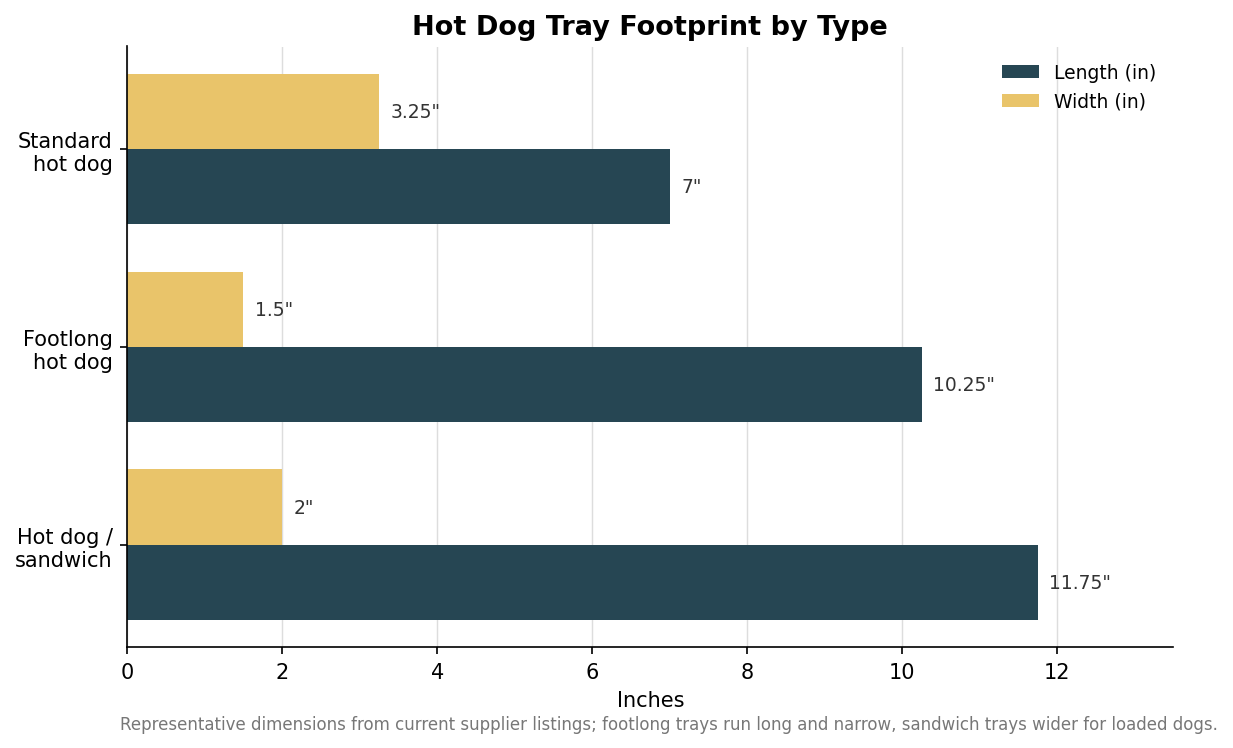
The pattern to notice is that length and width move independently. A footlong tray is long but skinny, so it is the wrong choice for a heavily dressed dog even though it is the biggest by one dimension. A standard tray is short but comparatively wide, which is why it handles a plain-to-lightly-topped dog well but overflows once you add chili and cheese. Match the tray to the widest, messiest version of the item you sell, not the plainest.
When you need a food tray instead: the numbered system
Once toppings or sides enter the picture, a flat hot dog tray stops being the right container and you move to a numbered food tray – the deeper, boat-shaped trays sold as #25, #50, #100, and so on. The numbering looks cryptic but follows a simple rule: divide the number by 100 to get the rated capacity in pounds. A #100 holds about a pound, a #200 about two pounds, a #300 about three. The chart below shows the full progression.
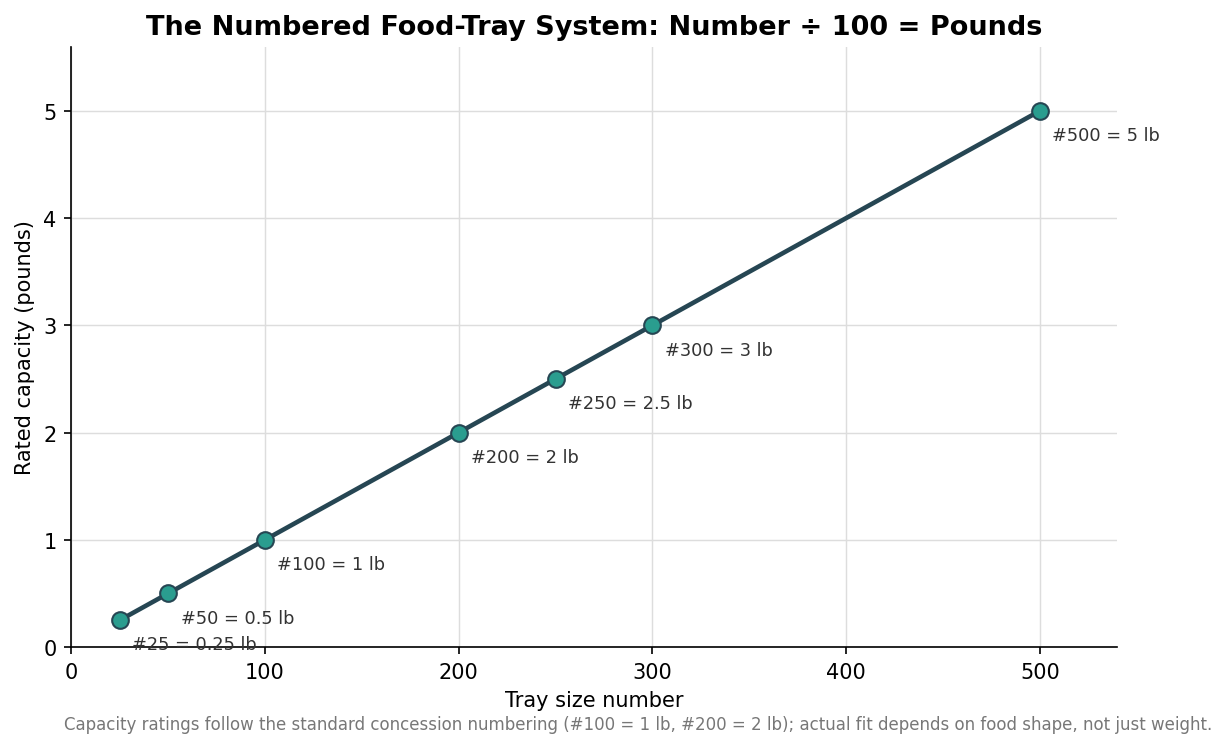
Those ratings are by weight, which is a useful shorthand but not the whole story, because a tray also has to fit the shape of the food. A #200 two-pound tray, for example, measures roughly 6.5 inches by 4.625 inches at the top, tapering to a 4.5 by 2.75-inch base, with about 1.75 inches of depth. That depth is the point: it is what keeps chili, nacho cheese, or coleslaw from spilling over the side the way it would on a shallow hot dog tray. When you are choosing, check both the pound rating and the top dimensions against the actual item, since a light but bulky portion of fries can overflow a tray that is technically rated to hold its weight.
Matching capacity to loaded dogs, combos, and sides
With those two systems in mind, the menu maps cleanly onto trays. A plain or lightly topped dog belongs on a standard 7-inch tray – inexpensive, fast to load, and sized right. A footlong or sausage wants the long narrow footlong tray so the ends are supported. A loaded dog – chili, cheese, onions, slaw – is better served by either the wider sandwich tray or a shallow #100 food tray that contains the toppings. A combo, where a dog shares space with fries or chips, is where the deeper food trays earn their place: a #200 or #300 gives you room for the dog plus a generous side without a second container, and two-compartment trays in the 6.5 by 2.75-inch range keep the fries from soaking in condiments.
The practical mistake to avoid is standardizing on one tray for everything. Operators who buy only standard hot dog trays end up double-traying their loaded items, which costs more per serving and looks worse than the right single tray would have. Operators who buy only large food trays overpay on board for every plain dog they sell. A two- or three-tray mix, matched to your actual menu split, is almost always cheaper per served item than forcing one size to do every job.
Coating and material still matter
Size gets the food to fit; the board and coating decide whether it holds up. Most quality trays today are built from kraft paperboard, and the better ones add a clay-coated grease barrier that resists soak-through from a chili dog or a pile of fries far longer than plain board. Coating specifications are worth reading closely for greasy menus – a plain uncoated tray is fine for a dry pretzel but a poor match for nachos. It is also increasingly common to see trays marked with attributes like No PFAS Added, microwave safe, and BPA free, which matter both for customer perception and for jurisdictions tightening rules on food-packaging chemistry. Whether the coating is worth the added cost depends on how wet your menu runs, and that trade-off deserves its own look before you commit a large order.
Ordering the right quantity and mix
Finally, translate the size decision into an order. Estimate your servings by item, assign each item to its tray, and buy in the proportions your menu actually sells rather than in equal splits – most stands move far more plain and standard dogs than loaded combos, so the standard tray should be the deepest part of the order. Because trays are light and store flat, buying the common sizes in case quantities is usually the lowest cost per unit, and a modest buffer of the wider sandwich or #200 trays covers the messy specials without forcing a rush reorder mid-event. Get the sizes matched to the food first, then the quantities matched to the menu mix, and the trays stop being an afterthought and start doing exactly what good packaging should: holding the food cleanly, costing no more than necessary, and looking the part in a customer’s hands.
Create your custom hot dog trays now.
Send your logo, quantity and date — you’ll get a free mockup and quote today.
Get a QuoteWin Free Stuff
Enter below for a chance to win plus receive 10% off your first order.
🎉 You are in!
Check your email for your 10% off code. Good luck!